

Yellowstone Roadtrip: Exploring, Traveling and Takeaways
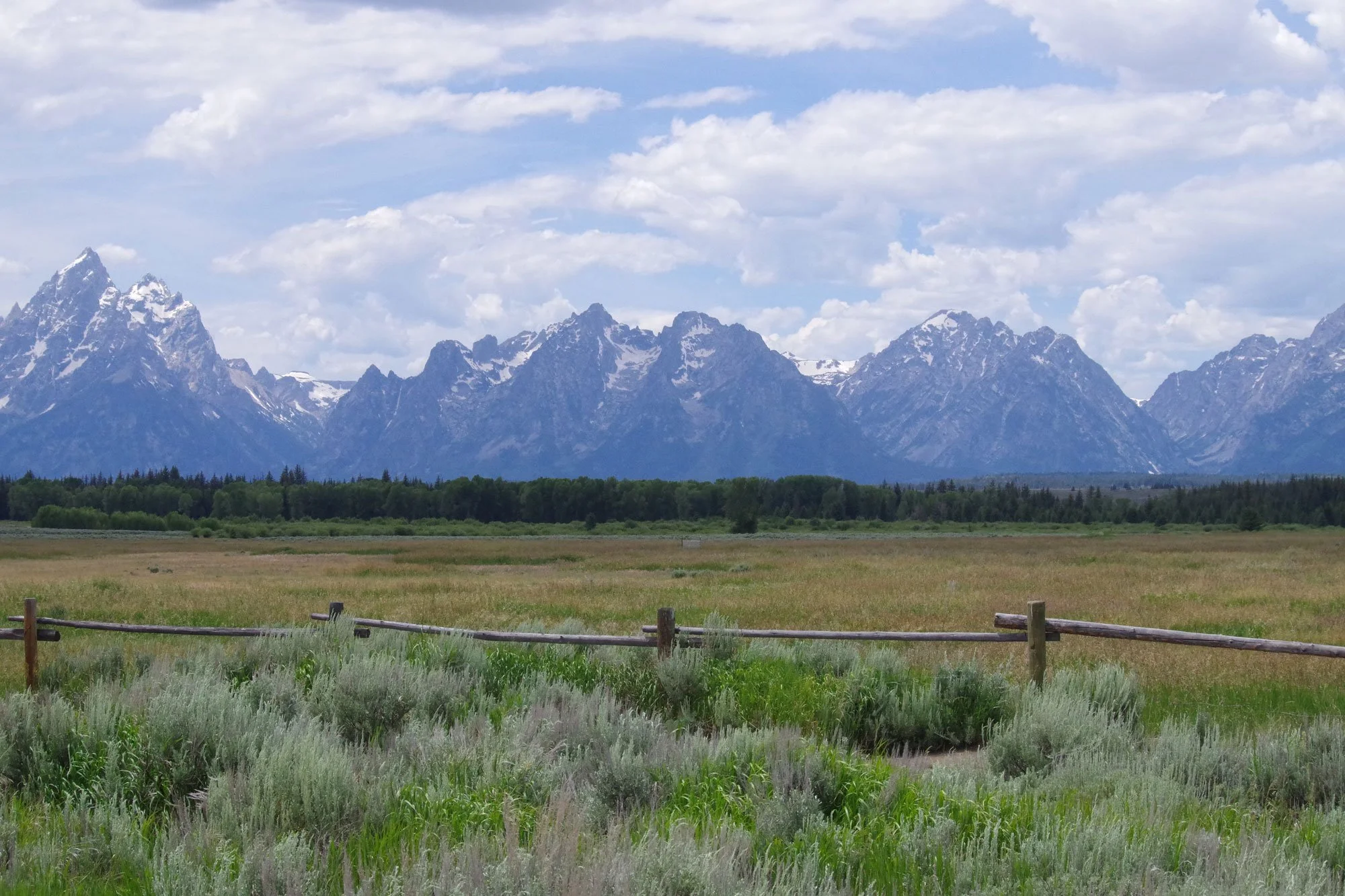
Yellowstone Roadtrip, USA
We left La Jolla on the last day of June with two dogs in the back seat and sixteen hundred miles of highway in front of us.
What I remember of the first stretch is mostly the heat, the light coming off asphalt in the Mojave in July and the negotiation about snacks that occupies any car containing more than one human.
This trip belonged to my husband's family, in Idaho, for their 50th wedding anniversary and fourth of July.
The first night was Las Vegas, where the heat did not let up after dark and the air coming off the parking lot at ten at night was still warmer than my bronzed skin. We arrived, we slept, and we were gone before the day had a chance to organize itself against us.
The second night was Provo, and somewhere in the space between those two nights and the highlight of this road trip, was the cow cuddle. Fold of Liberty Farms in Spanish Fork is about twenty minutes south of Provo, and keeps a fold of Scottish Highland cattle: the enormous shaggy ones with the fringe hanging into their eyes, which to me looked like something a child would draw when asked to imagine a friendly monster. You book a thirty-minute window, sit through a short safety video about very large animals whose behavior is not entirely predictable, and then somebody hands you a brush and opens a gate and you walk out into the pasture where the herd awaits their scritches.
No pen, no rail, no designated photograph location. It is a working regenerative farm, the cows are conducting their ordinary lives in a field, and I was a guest in their home for half an hour.
Most of them came to me rather than the other way around. I found the place along the ridge of the neck where the coat is thickest and worked the brush through it, and the animal shifted its weight into the pressure, the way a dog does when you have located exactly the right spot.
tip: weekends only, spring through the end of August, book ahead at utahcowcuddle.com, and wear closed-toe shoes you are willing to sacrifice. Depending on where the herd has wandered, you may cross a considerable amount of uneven pasture to reach them.
We drove the remaining distance to Island Park, Idaho, and arrived at night, in a thunderstorm, which felt theatrical and fitting for a place you have never seen and cannot yet make out.
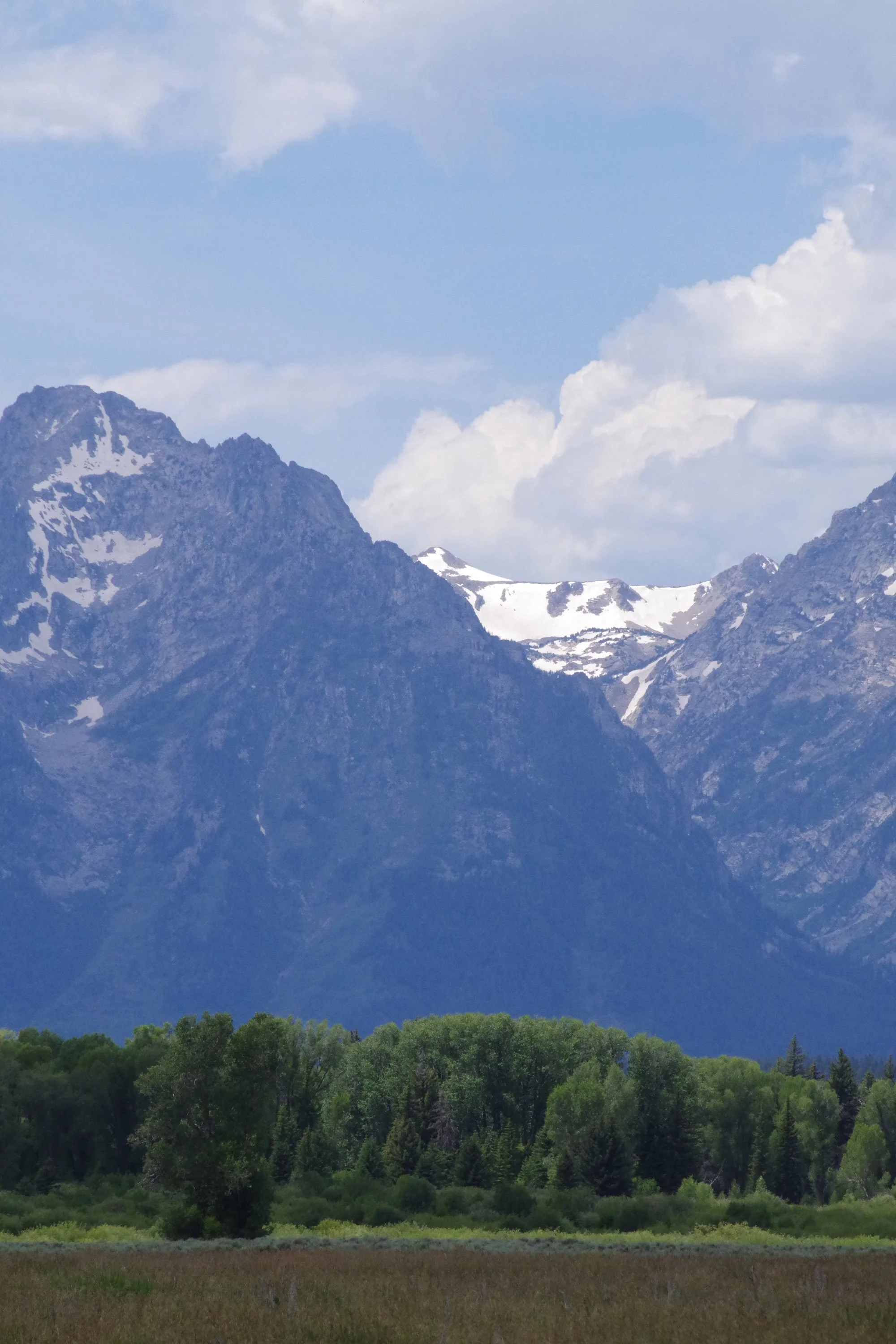
Then the morning arrived and showed us where we were: Mountains with snow still sitting on them in the first week of July, deer roaming through Pine trees, a fox close to us and unbothered enough to allow us to be in its presence for more time than I could have ever asked for.
Until now, I had organized most of my travels around coastlines and other countries. I came into this trip filing it mentally under family obligation, the trips you do because you love someone. I stood outside on the first morning with a cup of coffee in this corner of Idaho, pressed up against the western boundary of Yellowstone and I remembered I didn't need to look too far.
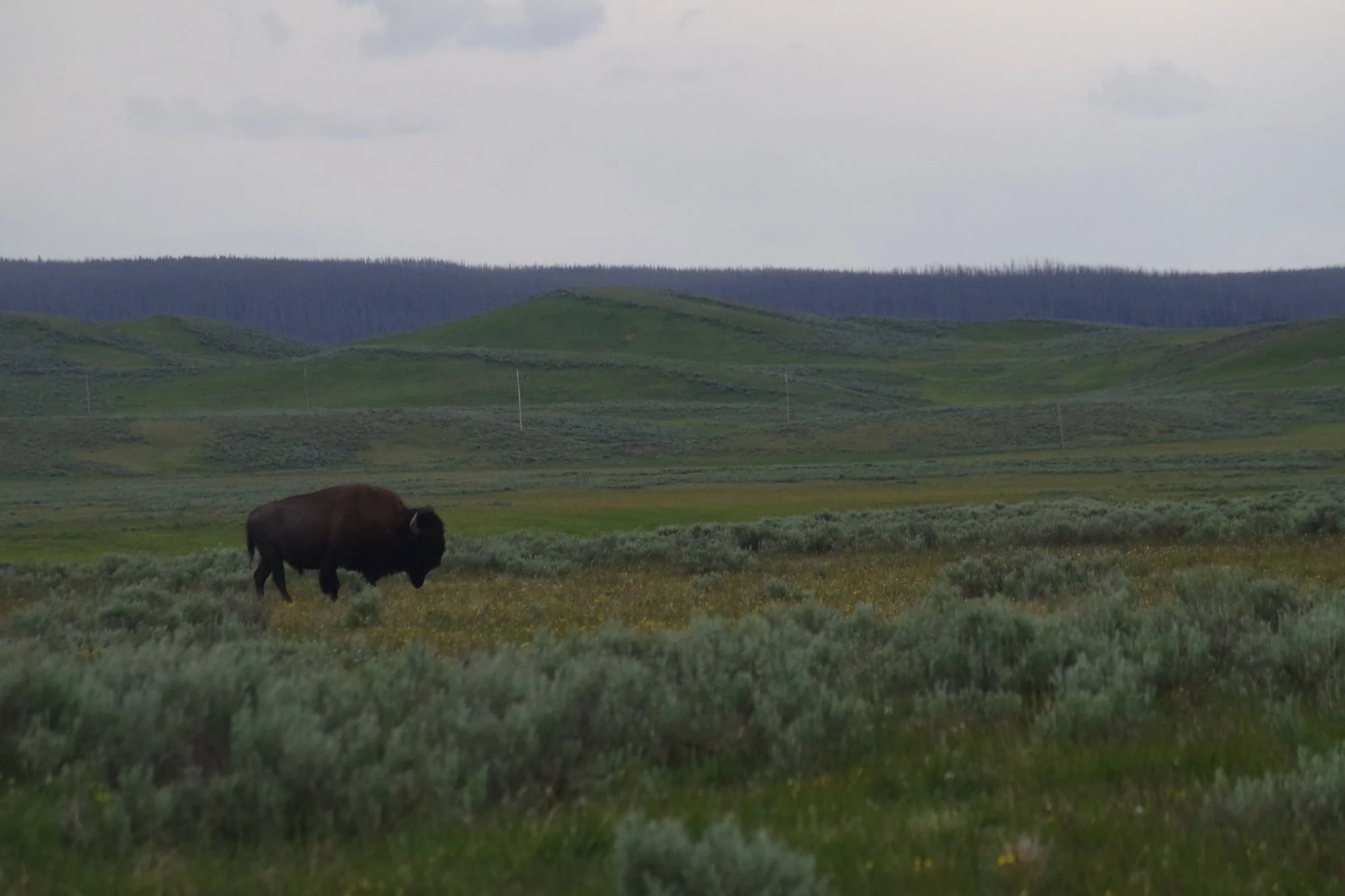
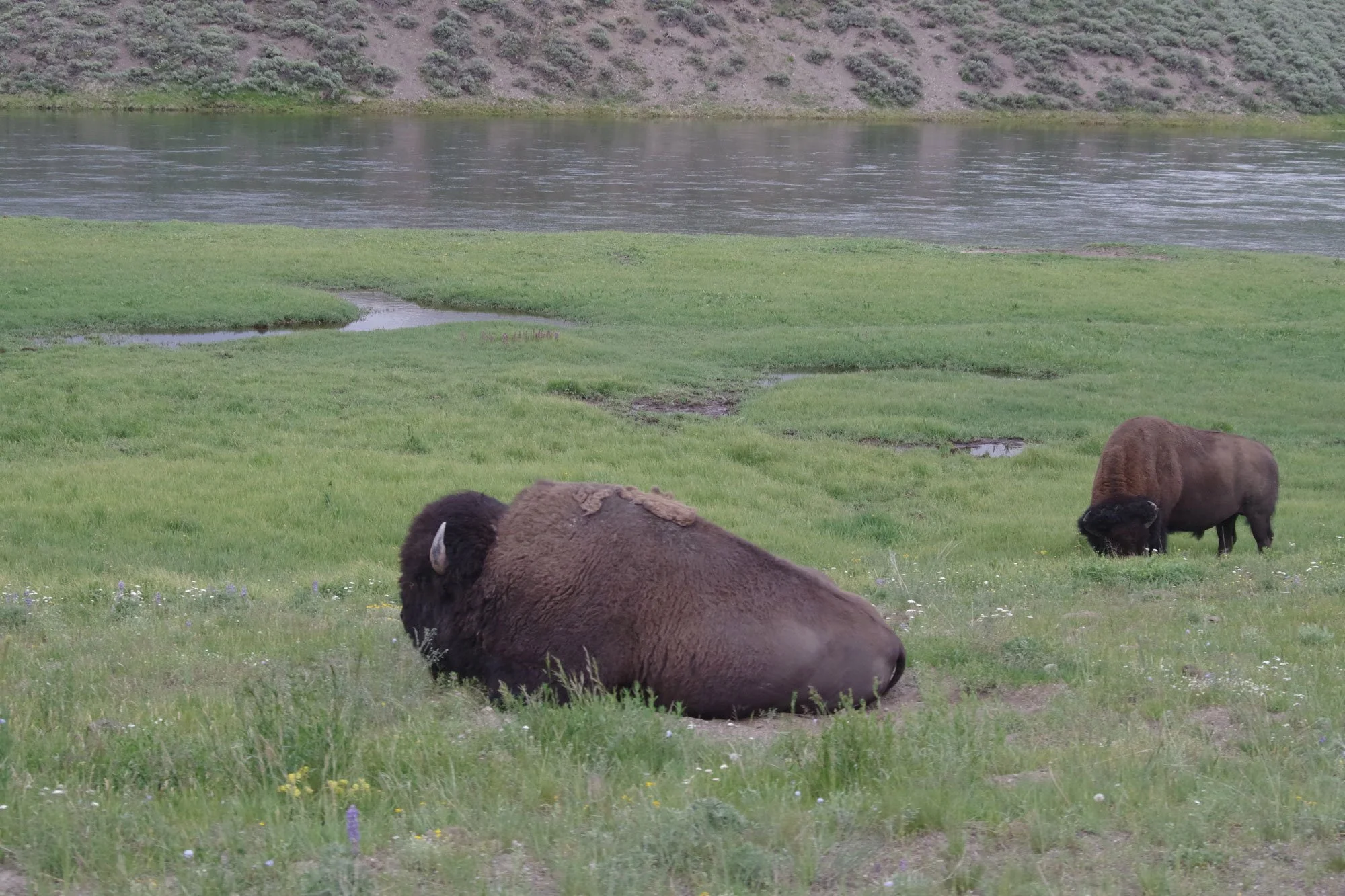
We stayed with my in-laws. The dogs came. Nothing was scheduled. My husband and I went into the park and drove the lower loop to catch up with the rest of the family that had left earlier. We did not see the Old Faithful. We did not see the Grand Prismatic Spring. We saw none of the features that appear on the post cards. Instead we sat quietly at the edge of Madison river and drove slowly alongside the baby bison on the horizon.
Our favorite was The Mud Volcano; a hot spring recessed into a small cave where the water inside it surges outward in a slow rhythm with an accompanying low sound, wet and pulmonary. Like something enormous breathing in its sleep. Steam comes rolling out with each surge. I stood on a boardwalk twenty feet away listening to the ground exhale, gas and water moving through a constricted chamber. We had caught something ancient at rest before the hail kicked us back into the car.
Driggs.
A few days later we drove to Driggs; a small town in Teton Valley on the Idaho side of the range tucked directly beneath the mountains. We spent the Fourth of July with family and fireworks. We saw friends, and we walked and wandered. I have spent years traveling in order to understand how people actually live in places that are not mine, and it is a little embarrassing how rarely I have aimed that same attention at a valley eight hundred miles from my own front door.
The Tetons.
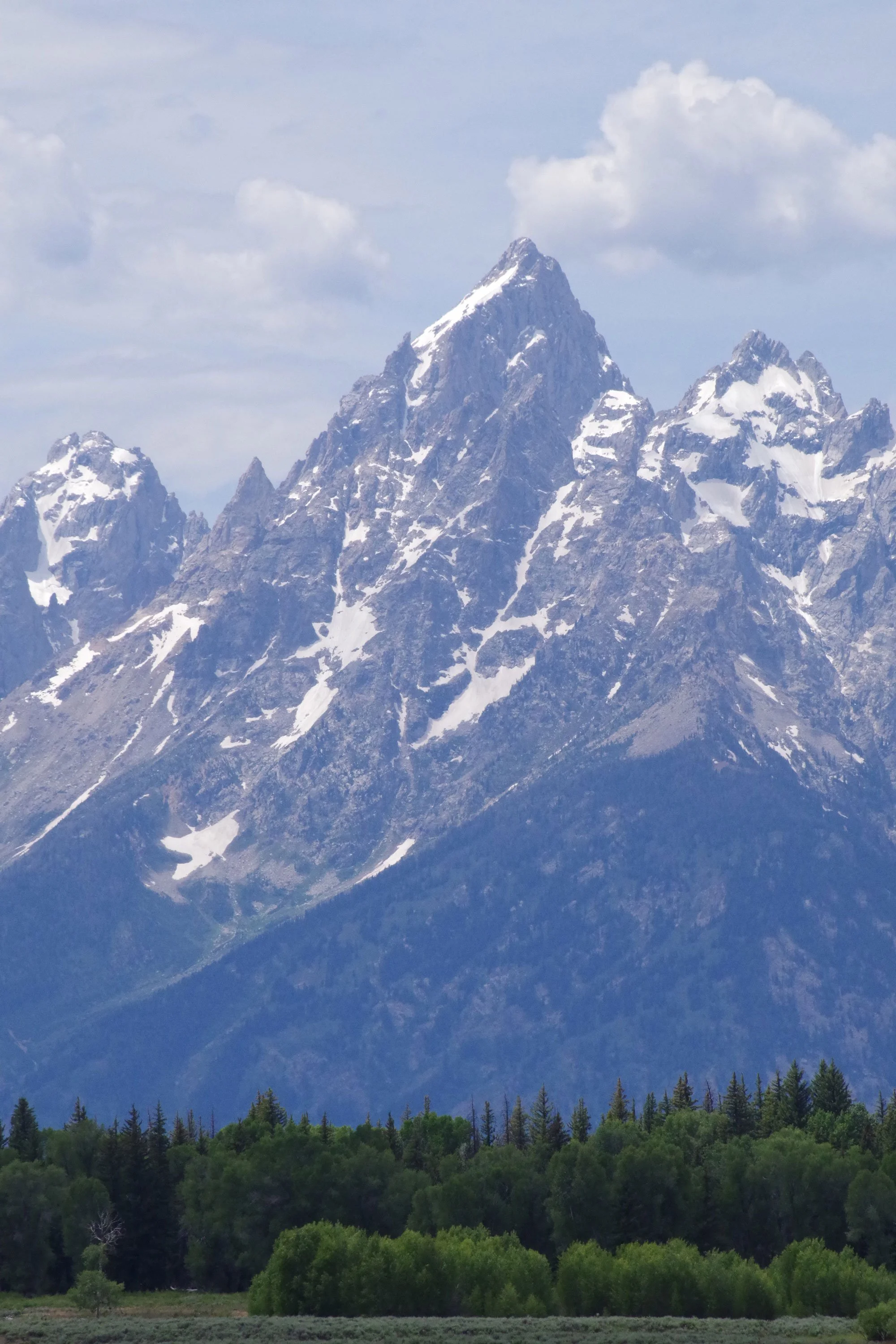
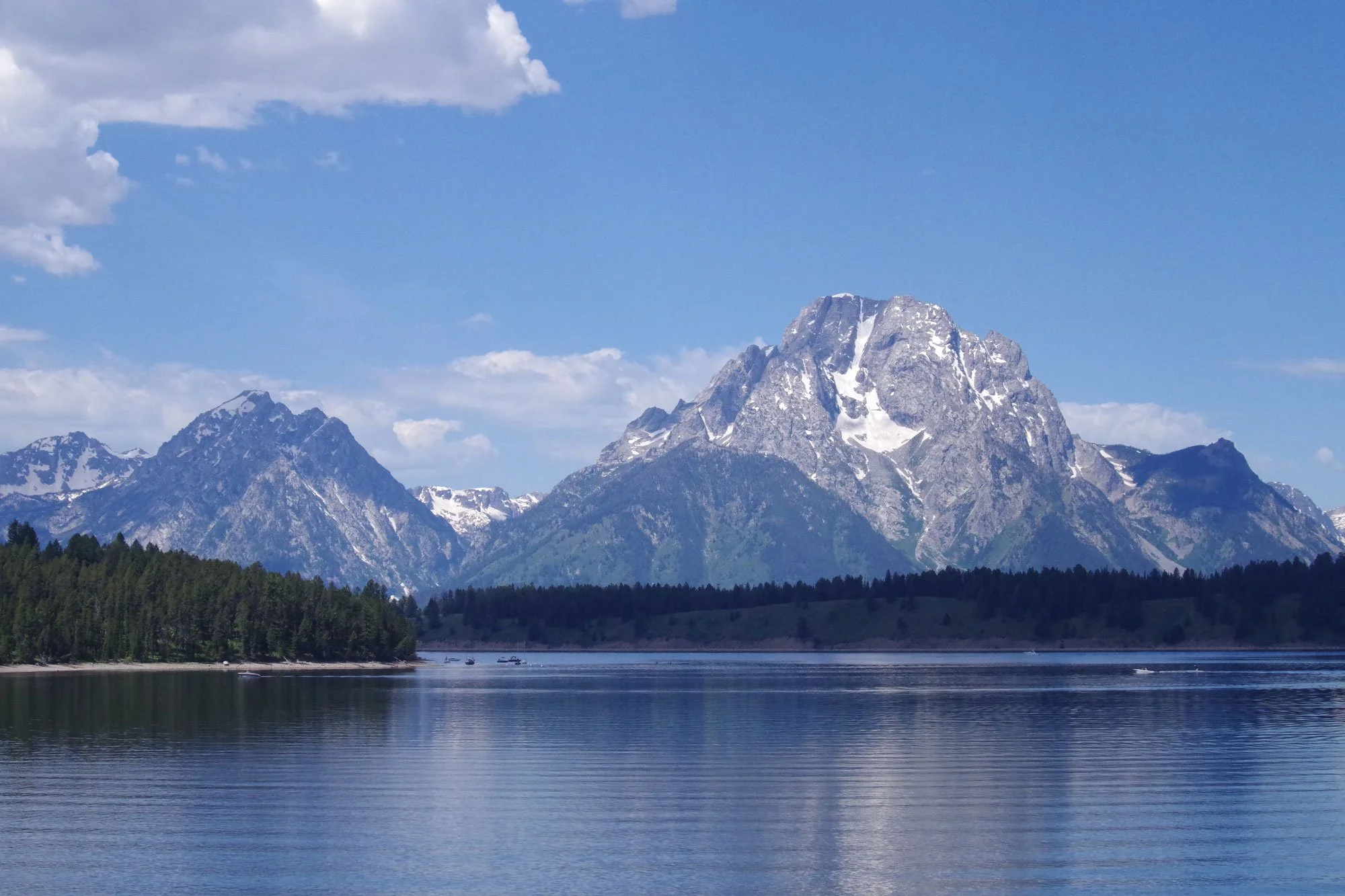
Jenny Lake was my favorite part of the entire trip. It is a glacial lake sitting directly at the foot of the range, and on a still morning the mountains reflect in the water letting you look at the same majestic thing twice.
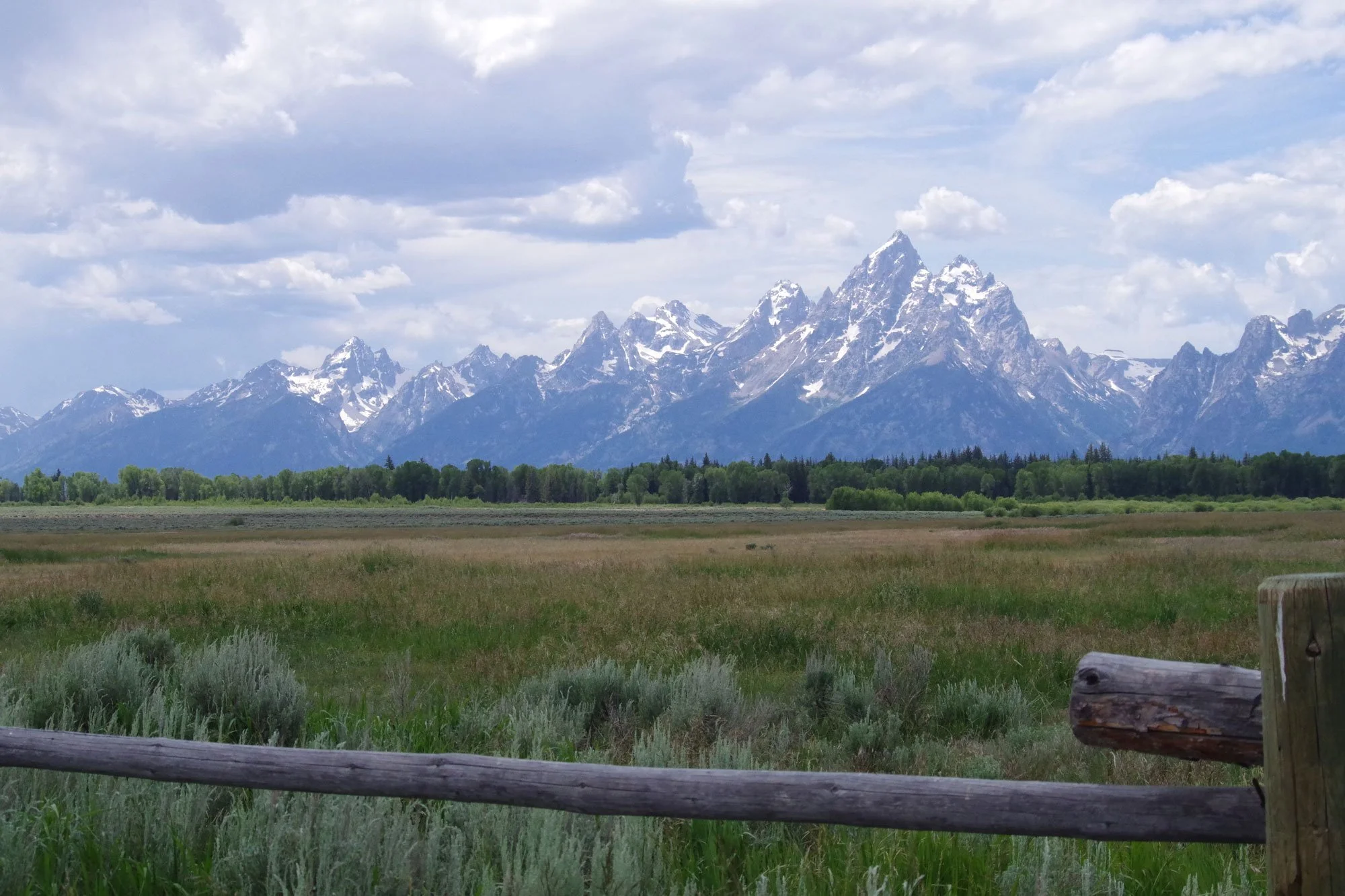
The Tetons do not build toward themselves the way most ranges do. There are no foothills, no gradual accumulation of elevation to prepare you: the valley floor is flat and then the peaks appear. Rising something like seven thousand feet out of nothing at all.
In Jackson we stopped at Moo's Gourmet Ice Cream just off the Town Square, for a wild huckleberry ice cream cone.
For anyone traveling with animals I highly recommend Teton Tails, also in Jackson, which stocks essentially everything a pet could require. Especially, Two weeks into a road trip when you have run out of something you did not think to bring.
Most ski resorts in the valley were shut for the summer unless you are biking or hiking. I spent several days looking up at gorgeous vacant runs with no possibility of being on them. I intend to return in the winter.
We went back to Driggs for a few more days, then drove south through Salt Lake City, stayed a night in St. George, and made the final long push home.
I have built an entire life of travel around trying to understand how people actually live somewhere, and this trip was exactly that, except pointed at my own country and at the family I married into: the cozy Airbnbs, the dogs asleep across a doorway, a van full of loved ones and foxes in the yard at dusk.
And the parks. I do not think I had properly registered, until I was standing on a boardwalk listening to a hot spring breathe, how strange and unlikely it is that a group of people a hundred and fifty years ago decided these places should simply remain as they were, that no one would be permitted to build on them or drain them or sell them off, that they would be held indefinitely for anyone willing to drive sixteen hundred miles to come and look at them.
I am grateful it is there, and I am grateful for the people I got to see it with, even if we missed the old faithful entirely.
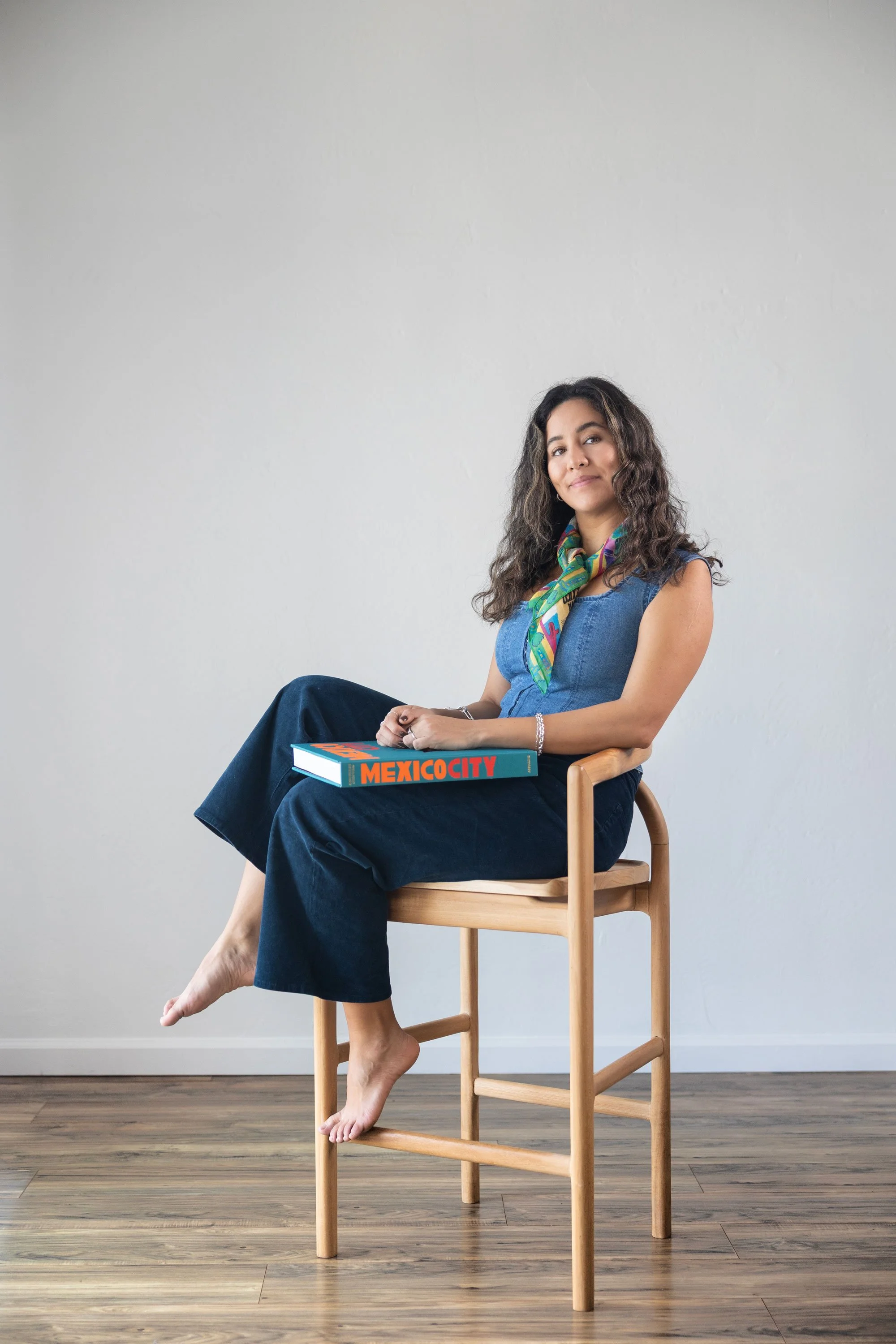
Aloreign is the creative work of Alondra: an Indigenous American and Mexican photographer, writer, and therapist based in San Diego.
This is my create space for photography, writing, and everything that doesn’t fit nearly into one category. I’d love to connect.