

Santorini, Greece: Exploring, Traveling and Takeaways
Santorini, Greece 2016
I went to Greece by myself for a long weekend in the winter and had one of the most photographed islands on earth largely to myself.
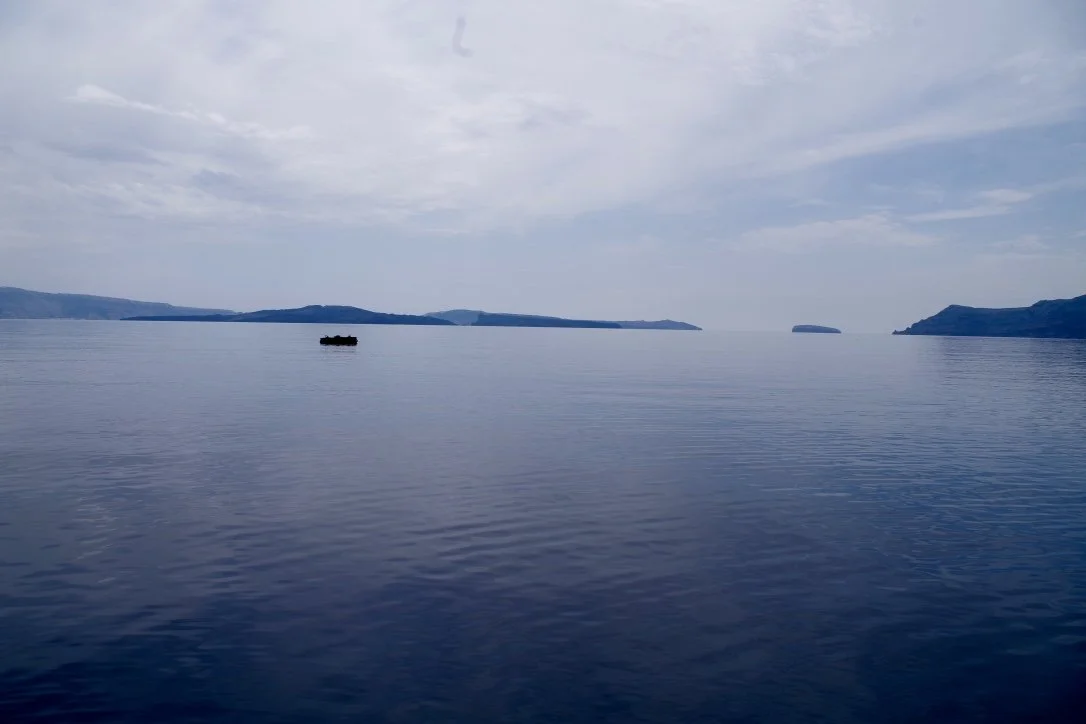
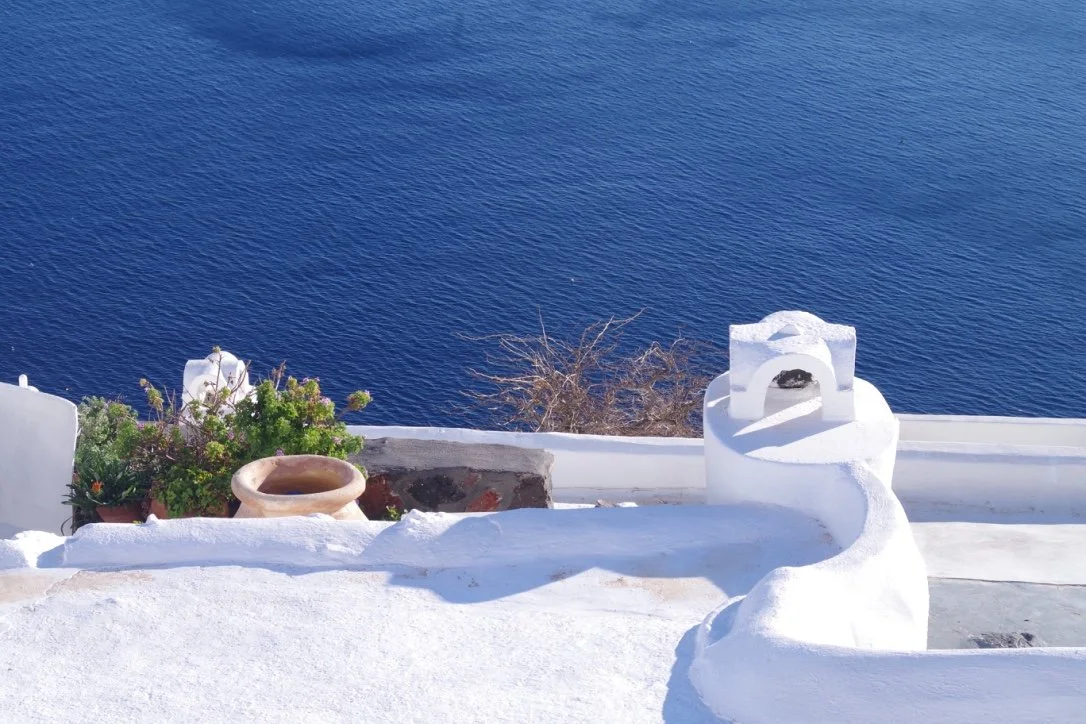
Half of the shops in Oia had their shutters down when I arrived. I could hear my own footsteps on the stone paths, which I understand does not happen in July. The sun stayed low all day instead of climbing overhead, so the sea held a navy I had never seen and the villages looked whiter than usual against a sky of the same navy blue.
Around 1600 BC this island erupted, and the eruption emptied the magma chamber underneath it, and the center of the island dropped into the sea. What is left is the rim. The cliff I walked along every morning is the inside wall of a crater, and the water in the middle of it is the crater floor, four hundred meters down in some places. There are two small dark islands out there. Those are new as the volcano is building itself back.
The cliffs show you the entire history in a cross-section. Bands of black and rust and grey, layer upon layer of ash and lava.
Going down hundreds of meters into water so deep that ships cannot anchor in most of the caldera. The white houses are built along the top edge of all of it like a line of salt.
Some archaeologists think this eruption is the origin of the Atlantis story. An advanced island civilization vanished into the sea in a single day. There is a Bronze Age town at Akrotiri on the south end that was buried in ash and preserved by it, with two-story houses and drainage and frescoes, abandoned before the ash fell.
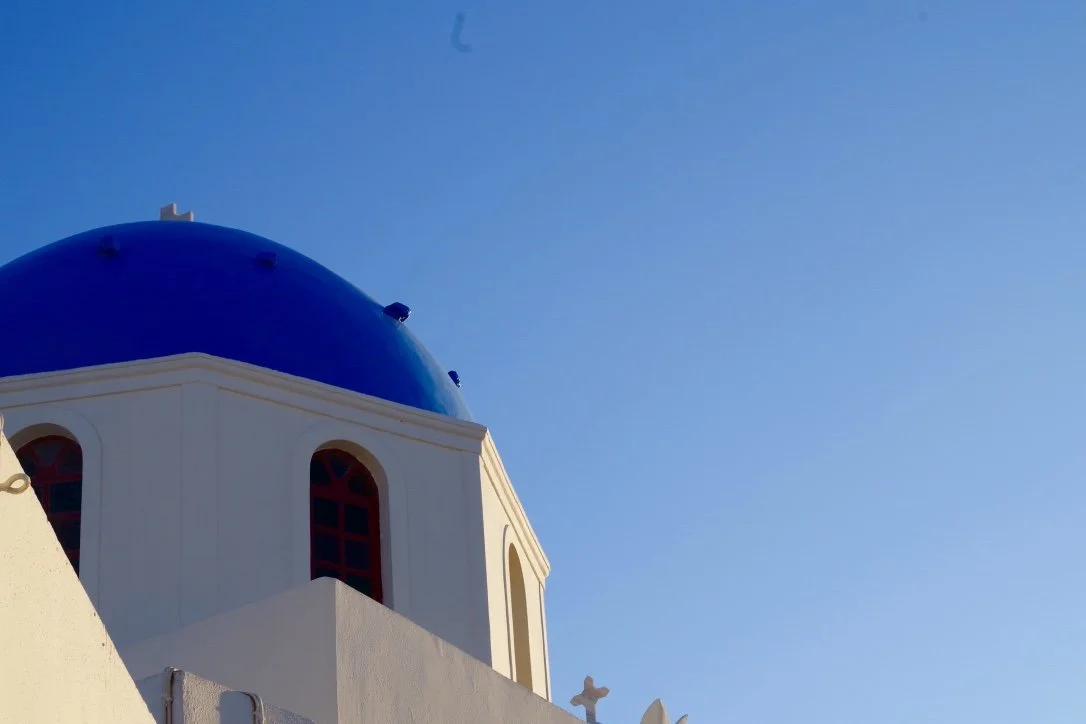
Down the length of Oia in the morning with the shops still closed, past pastel plaster in rose and ochre and faded pink, past arched doorways and blue domes, past a clock tower painted blue and white.
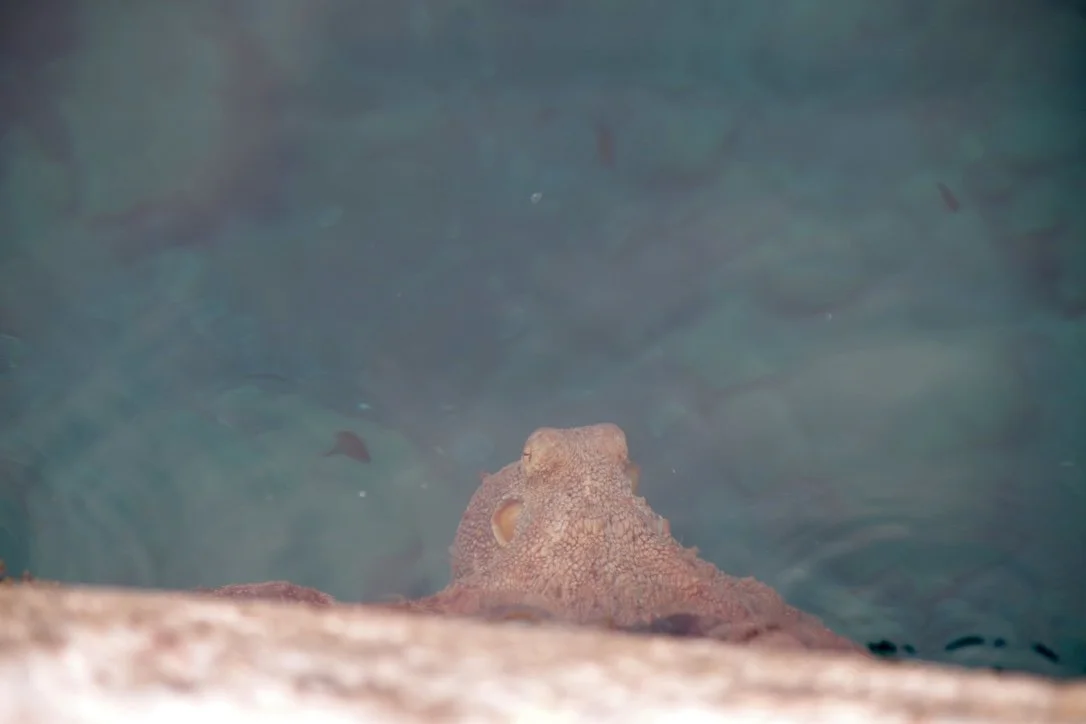
There is a road sign on the way down toward the water that says Όρμος Αρμένης, Bay of Armeni where we spent the majority of the days sunbathing and photographing sea life friends.
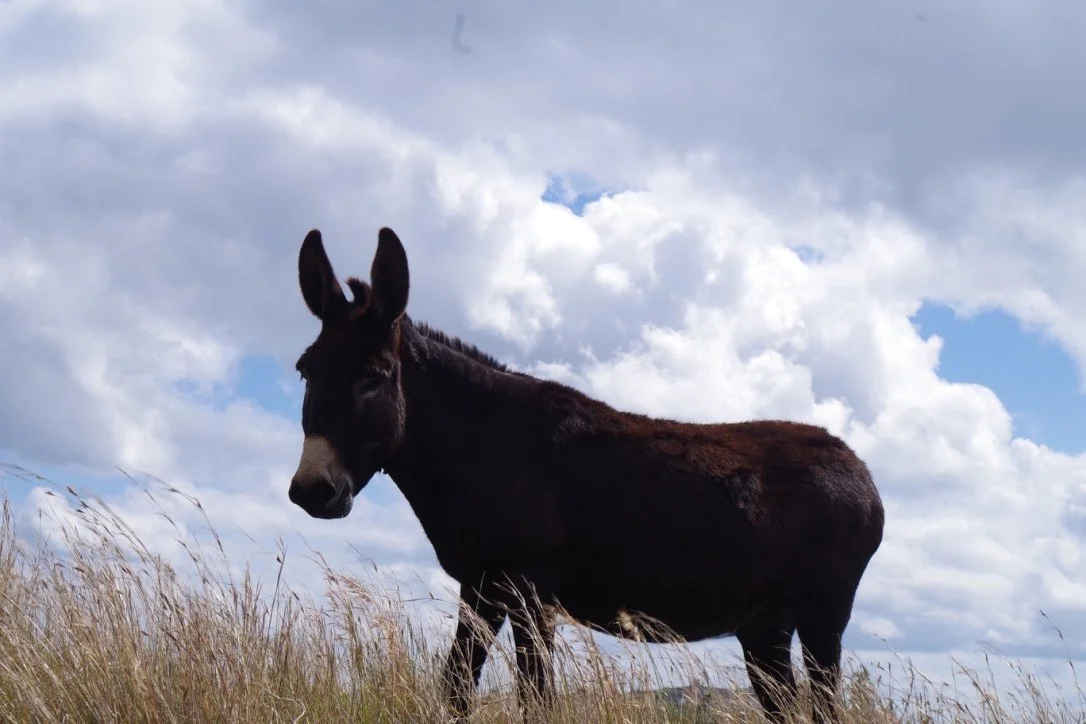
Donkeys standing around on the cliff paths, dogs asleep in doorways in the sun, without a care in the world.
At Red Beach on the south coast the cliffs come down in a wall of dark red volcanic rock, iron-stained, dropping straight onto red sand and blue water. Somebody had painted RED BEACH in red letters on a low blue and white wall at the top of the path, with an arrow, in case the color scheme had not made itself clear.
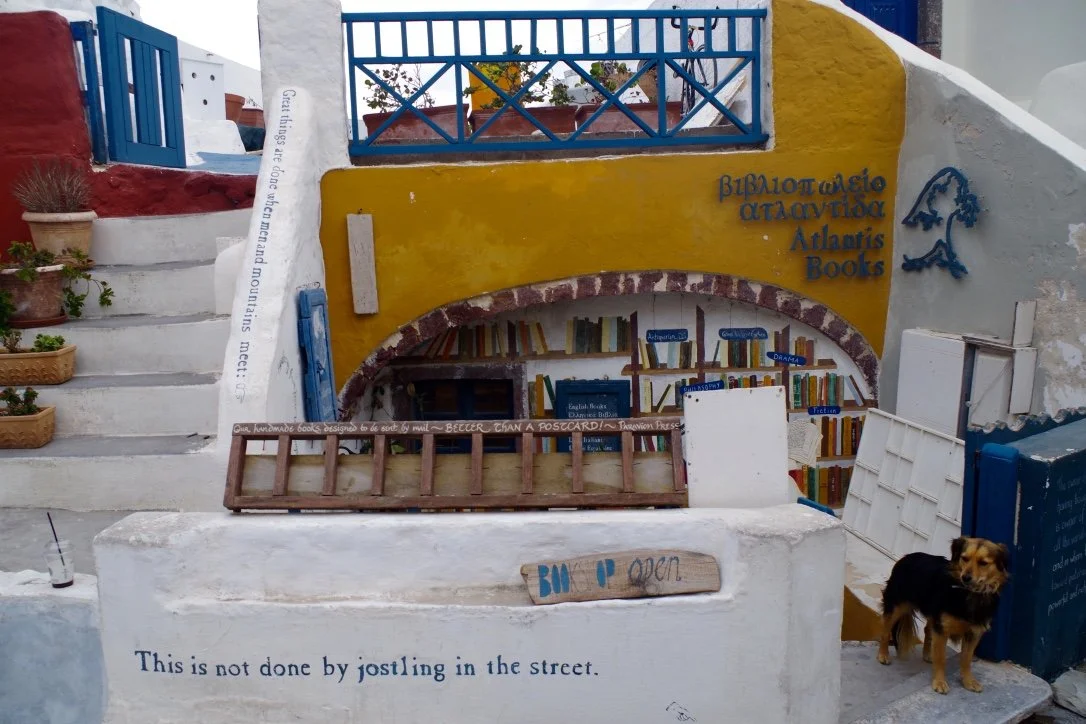
In the middle of Oia I found the Atlantis Bookstore that is no longer there and went down a few steep steps below street level into a whitewashed cave house dug out of the volcanic rock. Inside were crooked shelves following the curve of the walls, books stacked into nooks carved out of the stone, a tiny wooden loft, handwriting all over the walls, and sometimes a cat.
Athens.
I climbed the Acropolis and stood under the Parthenon the color of honey and bone depending on where the sun was. The columns swell in the middle and lean a little inward, which I could not see at all until I stood at one end and looked down the row. They built the correction in so the columns would appear as straight from where I was standing.
Athens goes out from there in every direction in low white blocks, flat and pale and endless, and then Lycabettus comes straight up out of the middle of it, a green cone with a white chapel on the very top. Nothing else in the city is that tall.
Down in the streets I found the Athens I came to see. Narrow lanes with balconies and hanging lamps and wires strung across the gap between buildings.
Small domed churches sitting in the middle of intersections, centuries older than everything around them with the traffic just going around. Awnings over the doorways. Motorbikes up on the pavement. Somebody frying something two floors above me.
I ate at a place on a corner with Τζίτζικας και Μέρμηγκας over the door, which I could not read and had to ask about. It means the Cicada and the Ant. The waiter seemed pleased I had asked. It comes from the Aesop fable where the cicada sings all summer and the ant puts food away, and it is a funny thing to name a restaurant, given that the whole business is convincing people to sit in the sun and order more.
The food kept arriving in small plates: Grilled fish. Wild greens under olive oil and lemon, bitter in a way I was not expecting but went back for more. Cauliflower. A bowl of oil for everything else. Bread.
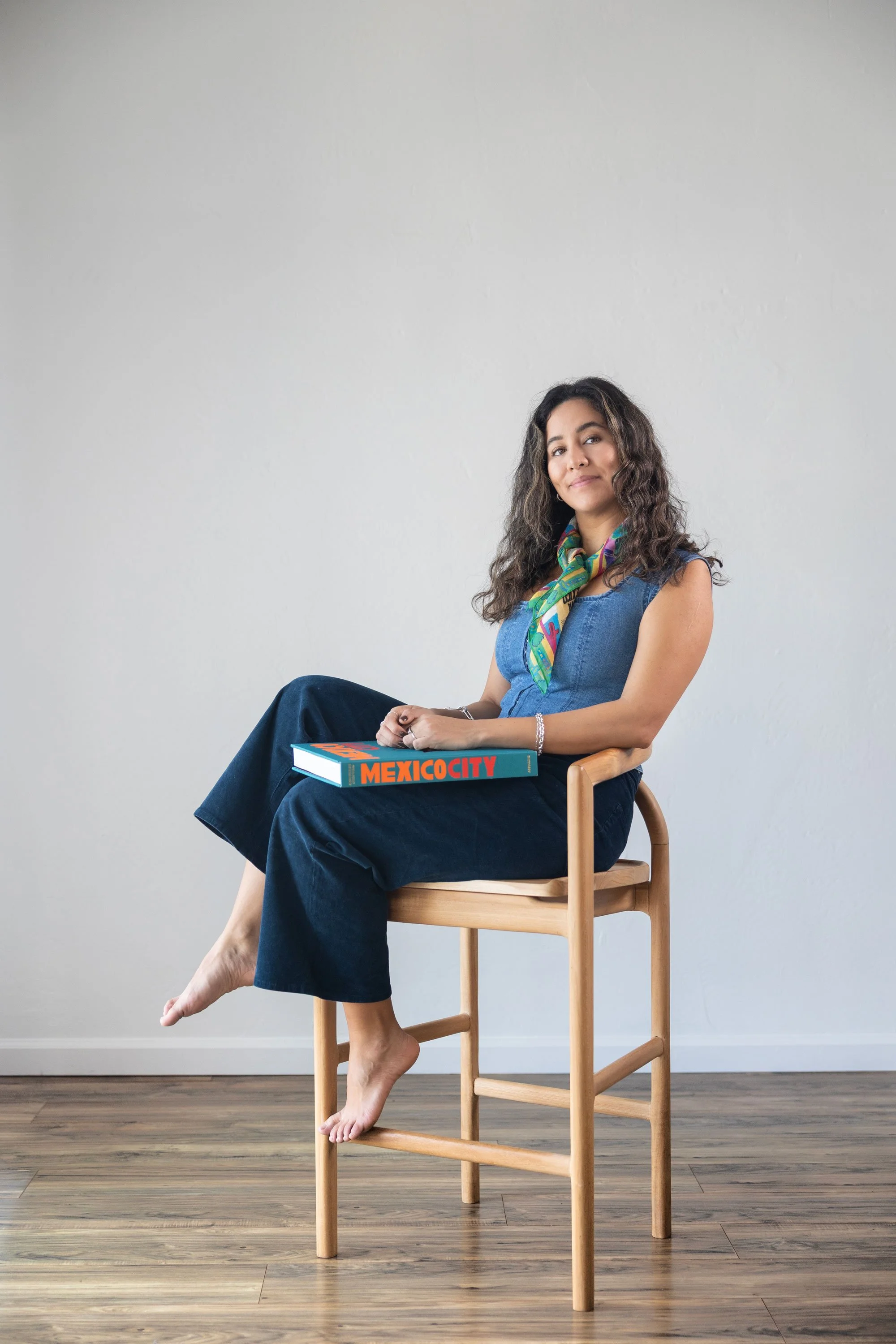
Aloreign is the creative work of Alondra: an Indigenous American and Mexican photographer, writer, and therapist based in San Diego.
This is my create space for photography, writing, and everything that doesn’t fit nearly into one category. I’d love to connect.