

Algarve, Portugal: Exploring, Traveling and Takeaways
Lagos 2016
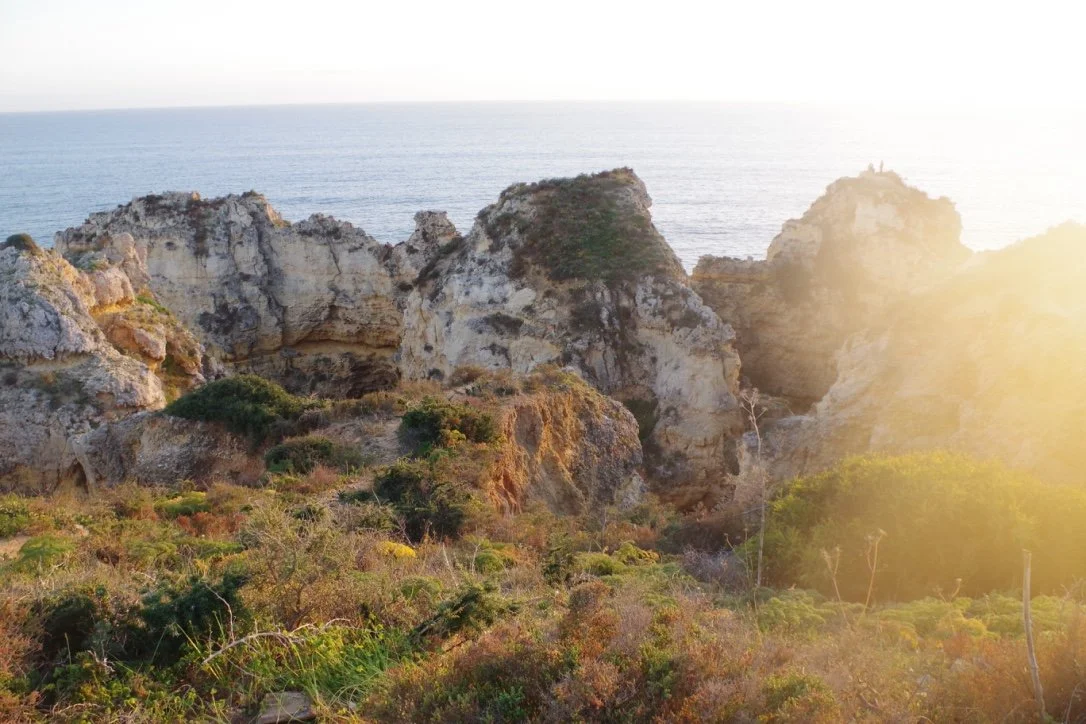
The south end of Lagos is called Ponta da Piedade and consists of a tangle of golden limestone stacks and grottoes standing out in the water.
Every arch a cave that opened at both ends. Every one was once attached to the mainland.
I put my hand flat on the rock at the bottom of the steps one morning and it came away chalky. All of this was seabed once, laid down in the Miocene out of the settling bodies of sea creatures. There are fossils visible in the older bands if you get close.
You walk along the top. There is a coastal path that runs from Praia Dona Ana out to the lighthouse at the point, forty minutes at an unhurried pace, boardwalk in places and dirt in others. It is the best walk I have taken on any coast anywhere. The path holds the cliff edge the whole way there, so the view keeps rearranging itself; first an arch appears, then a cove drops away below you, then a stack you had been looking at from the front is suddenly a completely different shape.
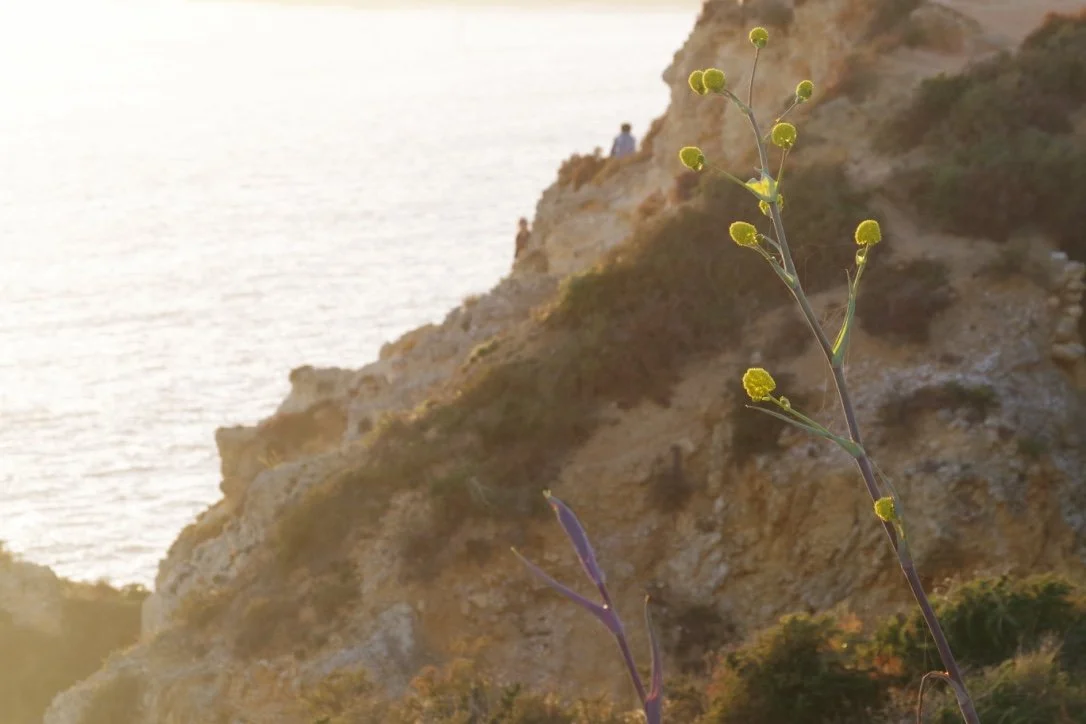
My favorite was the prickly pear, coming out of soil and the agaves
Agaves is a century plant that sends up a single enormous flowering stalk, four or five meters straight into the air, once, at the end of its life, and then dies.
There are about 200 wooden steps between the top and praia de Camilo.
The stairway switchbacks against the cliff, so you drop past the bands in the rock one layer at a time. At the bottom the sand reflects the light and the whole face above goes orange. The cove is small enough that the cliffs close around three sides of it and the noise of the waves bounce back. Dona Ana is wider, and busier. Yellow and red run through the walls around it.
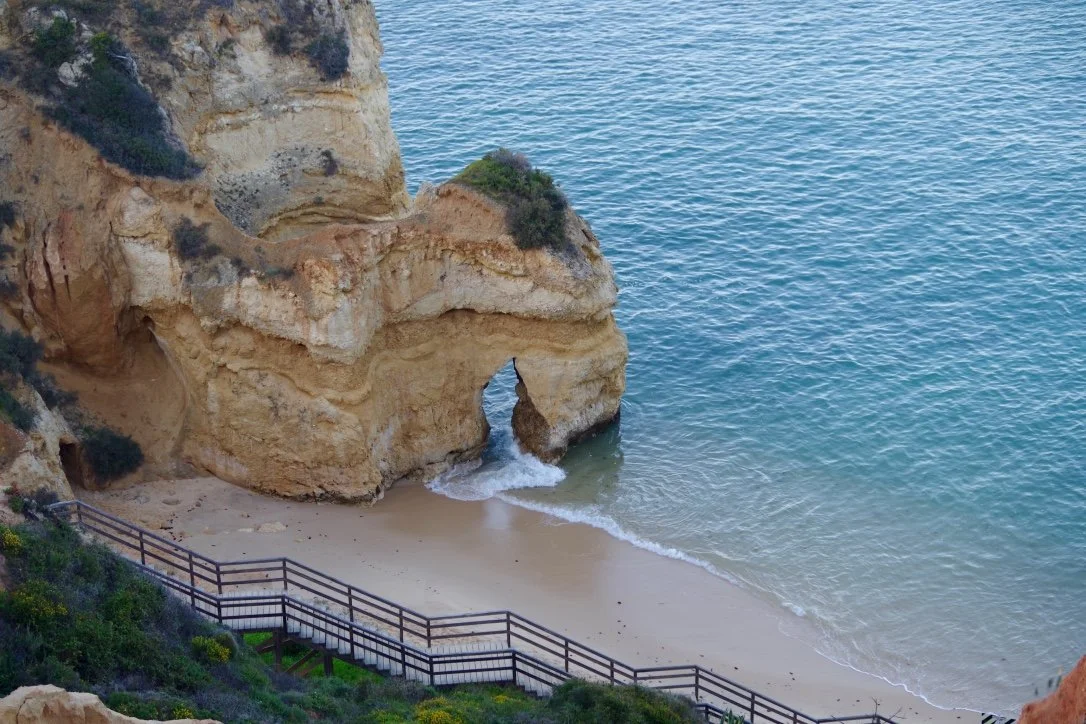
The tide is Atlantic, and moves. Coves that are wide and generous in the morning have no beach left by late afternoon.
Lagos itself is a walled town with a proper old quarter, cobbled in the black and white patterned stone the Portuguese lay in their streets, with azulejo tile on the fronts of the buildings and laundry over the balconies and small squares that open up without warning. The town walls are sixteenth century.
Portuguese grilling is a whole fish, sea bream or sea bass depending on what came in, goes on charcoal with salt, and arrives with boiled potatoes and a plate of tomato and onion. Lemon and olive oil on the table for you to do the rest. The wine costs less than the water in some places. Vinho verde comes cold and slightly fizzy and barely alcoholic made exactly for this lifestyle.
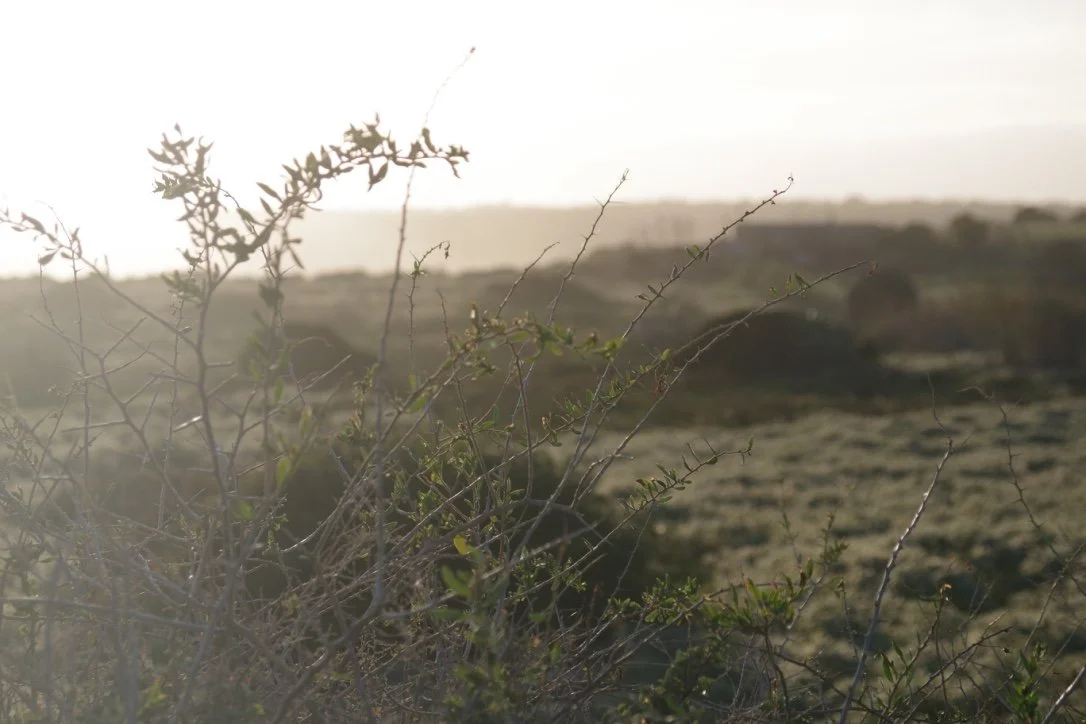
With a full stomach, the sun, and the sound of the Atlantic doing its work on the cliffs behind me a nap ensued until the light around me started to change.
Facing south and west into the open ocean, the entire coast catches the sun at a low angle for hours at the beginning and end of the day. The limestone takes it and gives it back. Late in the afternoon the cliffs go from cream to gold to a deep orange, the water flattens out, and everything gets hazy and backlit and slightly unreal.
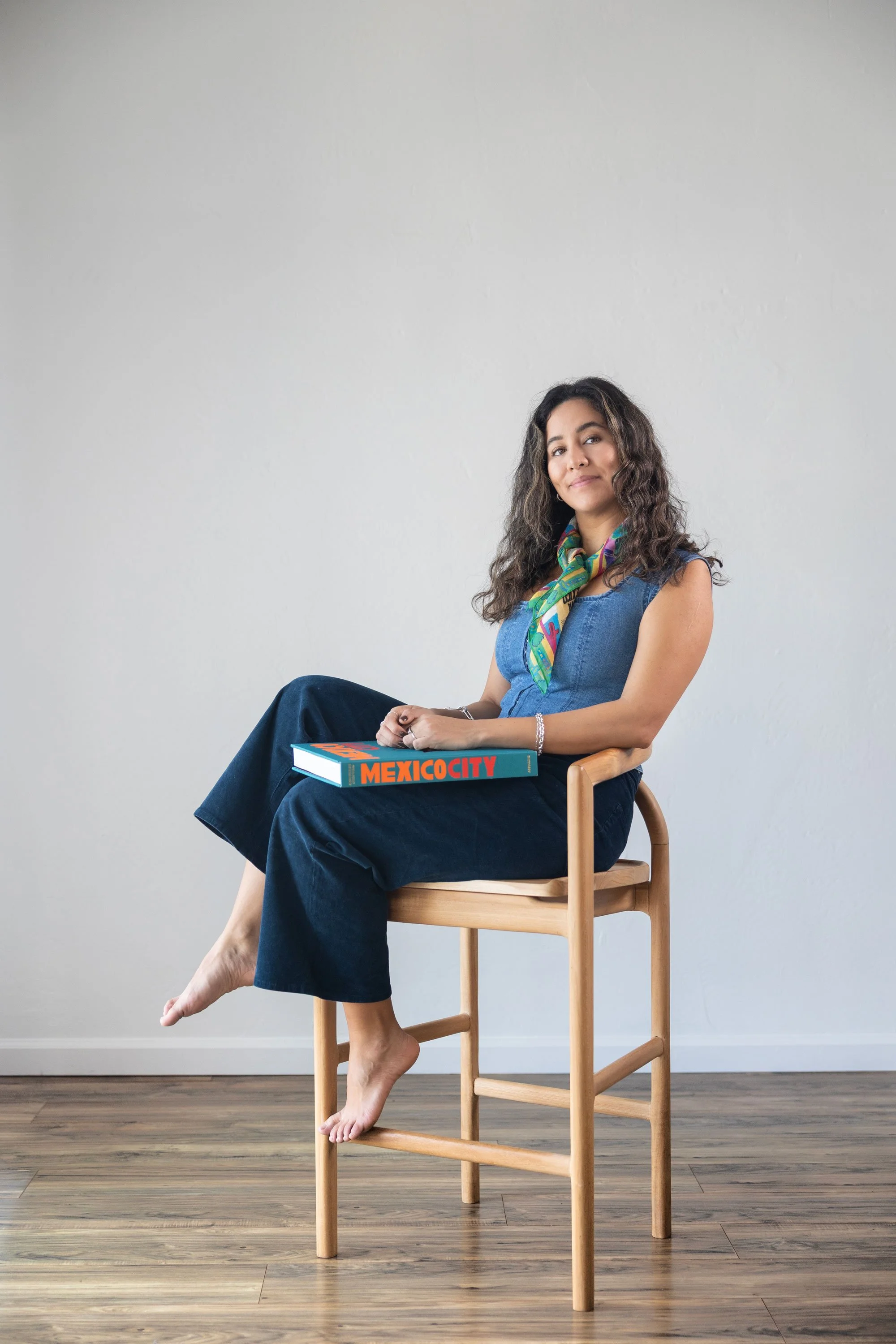
Aloreign is the creative work of Alondra: an Indigenous American and Mexican photographer, writer, and therapist based in San Diego.
This is my create space for photography, writing, and everything that doesn’t fit nearly into one category. I’d love to connect.