

Moorea, Tahiti: Exploring, Traveling and Takeaways
Moorea, Tahiti
We landed in Tahiti late at night, took a taxi to our airbnb, and got up early for the Papeete market.
It was crowded by seven. A woman near the door was threading tiare blossoms onto wire and misting them from a spray bottle every few minutes to keep them from browning. There were vanilla beans in bundles tied with raffia, dark and soft enough to bend. Rambutan in heaps with the red hair still on them. Breadfruit stacked like cannonballs. At the fish counters the tuna was laid open in long red slabs on ice, and a man was portioning one with a knife he wiped on his apron between cuts. We got coffee. I bought fruit I could not name and ate it standing up. Papeete was busy with its own morning and had no interest in ours.
The ferry terminal on the waterfront had our tickets for Moorea, and while we waited in line with the street chickens we admired their freedom to roam and total unconcern of animals who have accurately assessed that nothing is going to happen to them. Papeete is a working capital and was busy with its own morning and didn't organize itself around your arrival. Our kind of a vacation destination.
The channel between Tahiti and Moorea is only about twenty kilometers wide, and the crossing takes half an hour, the entire proposition is so casual that the boats run all day like a bus line with locals commuting on them.
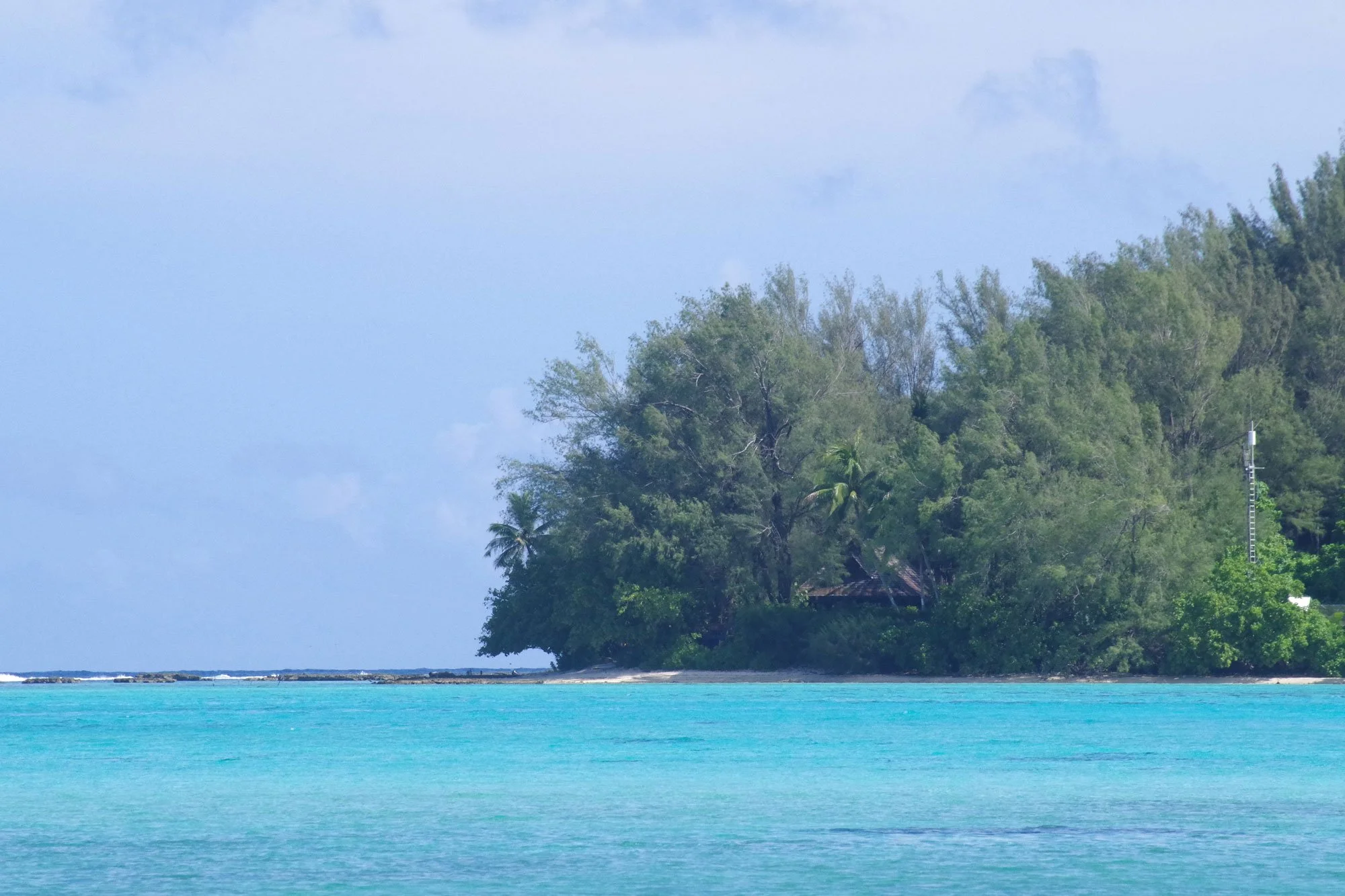
We sat on the open upper deck and watched Tahiti recede behind us while Moorea became grander by the second, all of it green and vertical and serrated. The sun kissing our sunscreen free skin.
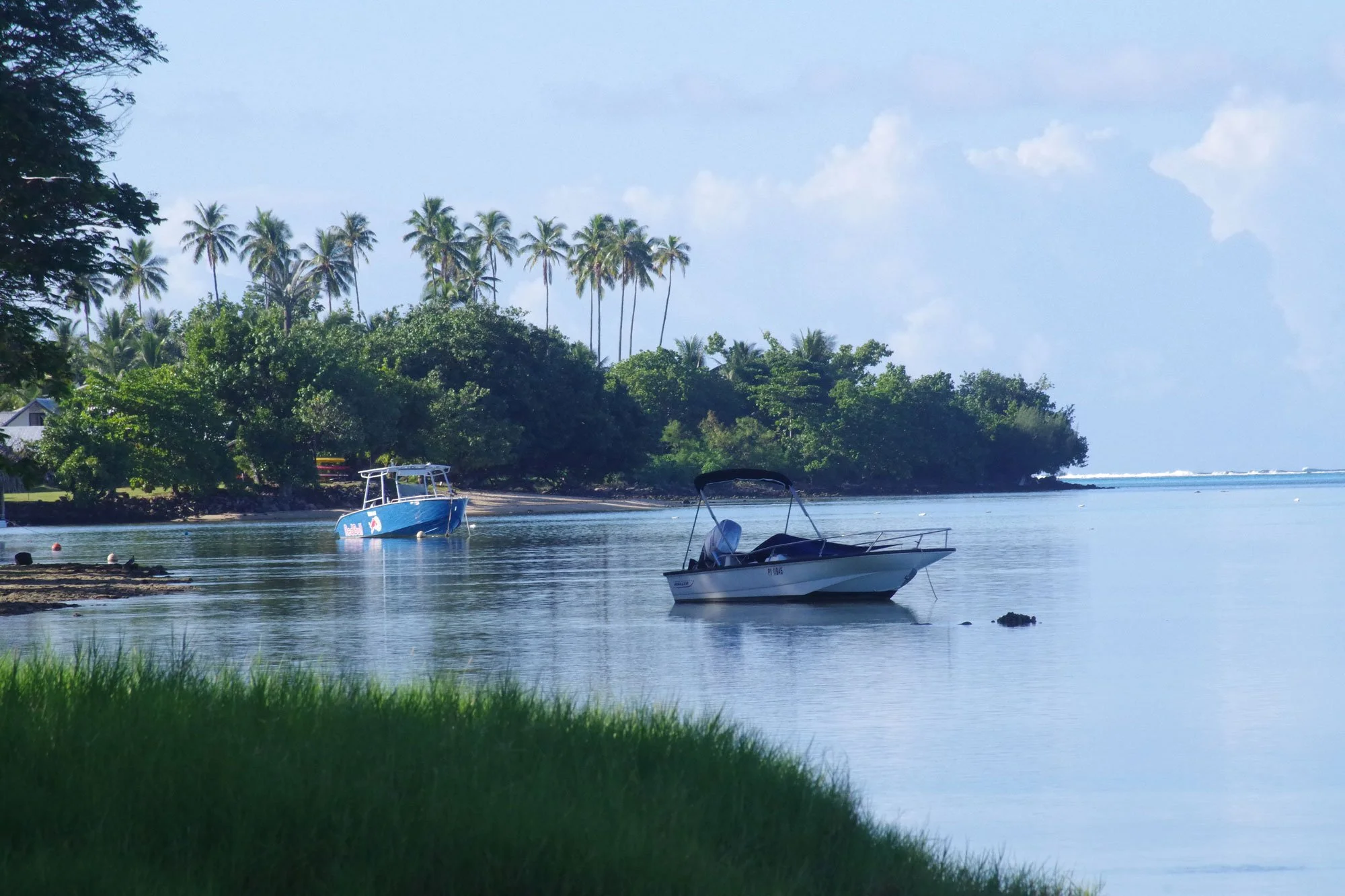
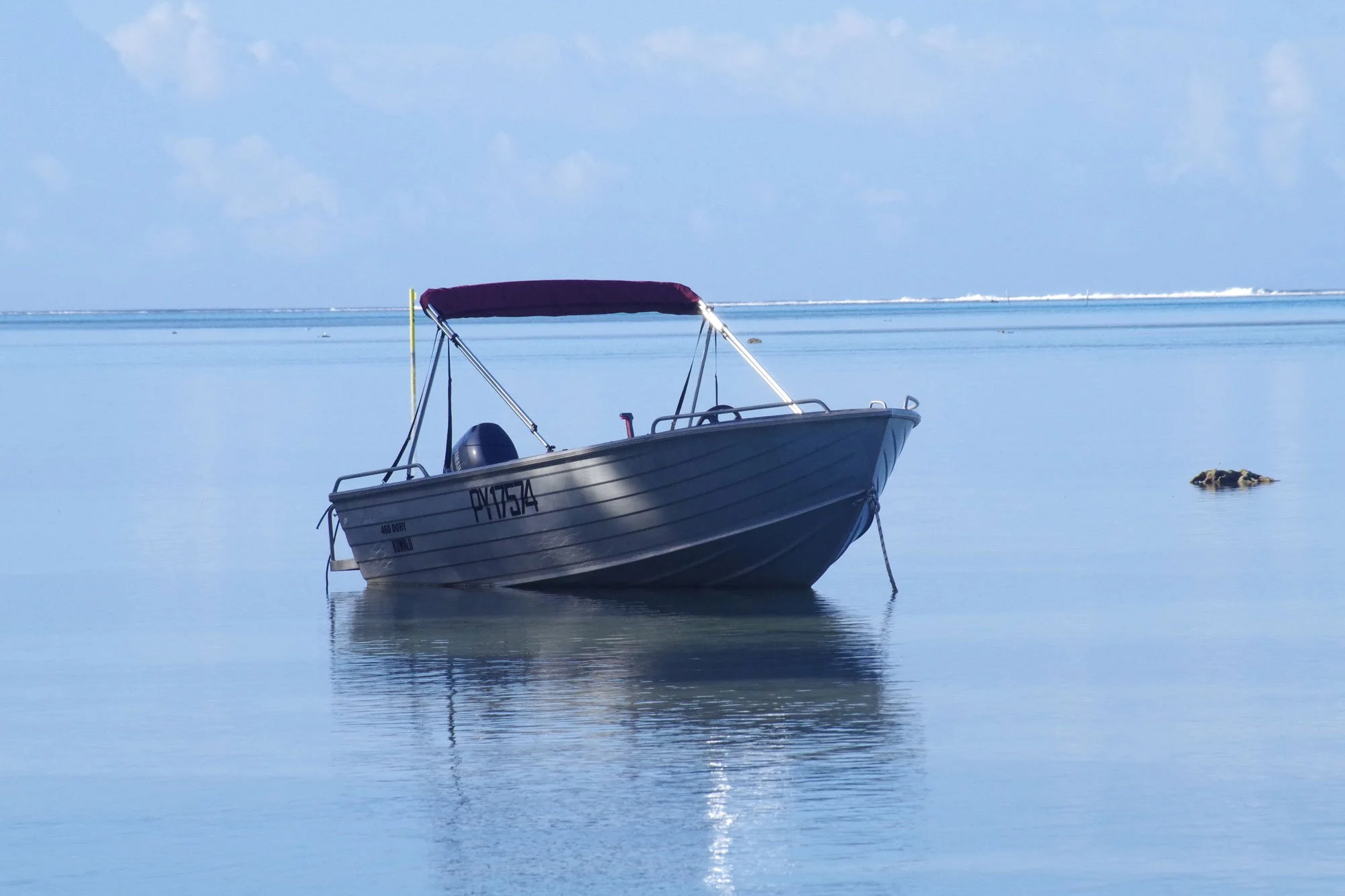
As soon as we arrived at Moorea we rented a car at the port terminal and drove to our Airbnb that awaited us at the edge of the lagoon. We stepped out of the house into the yard and there was the water.
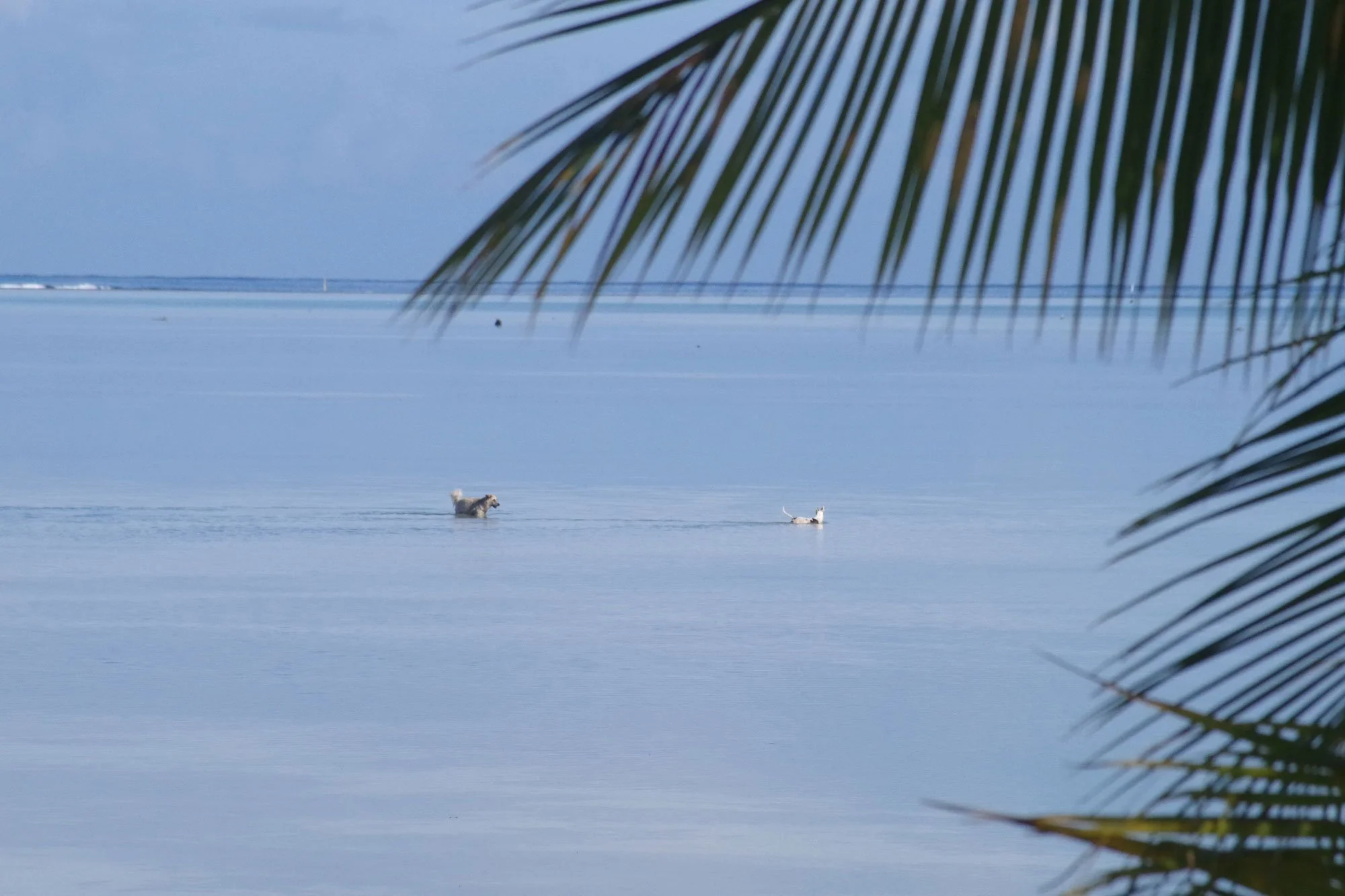
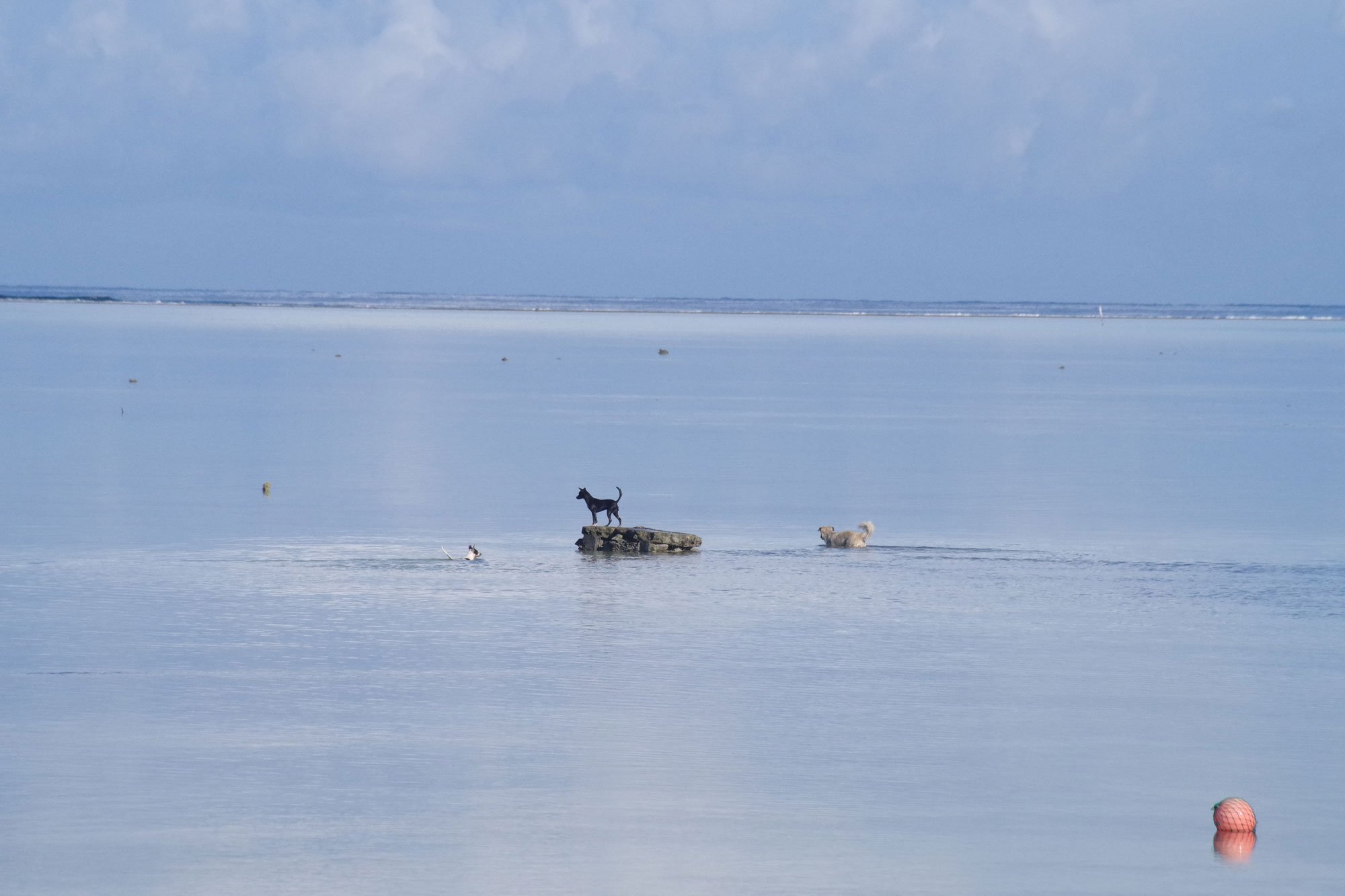
There were kayaks and paddleboards and we brought snorkel gear. Getting into the lagoon became as ordinary as walking into another room. Sea cucumbers lay arranged across the sand. Stingrays glided past close enough that I could see the sand lift and settle behind them. The blacktip reef sharks are maybe a meter and a half long and entirely uninterested in us, and my body did not care about that at all the first several times a fin came into view. We went in every day, never just once.
You have two options on Moorea. You can stay at a resort in overwater bungalows where everything is provided.
Or you can stay in a house, in which case you will be responsible for feeding yourself, and the process by which you do that is not always a supermarket.
Four mornings in a row I walked into the same small room at the same hour and stood in the same short line, and there was no flicker, no nod, nothing. Which is correct. I was a woman on holiday buying a baguette for the day, one of some number of women on holiday buying baguettes that week, and the odds do not favor being remembered. I went at six because by seven the bread would be gone. The bread being gone is not a service failure. It is simply the quantity of bread that existed that day. Nobody was going to bake more because I had slept in.
I never once slept in. Not out of discipline.
I was awake before the alarm most days because I wanted to go in the water, and I wanted to get the food, and I wanted to plan the day and make breakfast. Not a moral achievement. I was on vacation from choosing in a way that the woman ahead of me in line at six in the morning was not.
Then I drove along the coastal road until I found a fisherman parked on the shoulder next to what he caught that morning. It was a different man each time though I do not know what I expected, some designated fish person I would come to know. Instead there was whoever had gone out that morning and come back with something, parked on the shoulder with the catch on the truck. Some days I could still see men in the water while I was buying from a man who had finished. Some days I got there and the truck was already packing up. I tried to make conversation, in eleven words of French plus gesture plus goodwill, and I do not think I ever succeeded in saying anything beyond hello and thank you and some approximation of that one, please. What I actually wanted to communicate was that I appreciated the work, that I understood the fish had been alive that morning and in the ocean I had swum in, and that I was grateful he would sell it to a tourist rather than reserving it for people who would still be there next week.
I thought of my ancestors, and about the fact that I was paying money to briefly live the way they lived without a choice.
My family's whole story is a story of leaving. My great-grandfather left Spain. My parents left Mexico. The line I come from is defined, generation after generation, by the decision to go somewhere else in search of something better, and the something better usually meant more, meant options, meant a supermarket that does not run out of bread at seven in the morning. My grandmother did not romanticize getting food fresh every day, because there was no alternative and it was work.
Then there was the flower crown. I wanted one badly, and I could not find any information about where to get one. The resorts run workshops where you can make your own, and I did not want to make one, I wanted to buy one from somebody who made them, which is a distinction I have some trouble defending but which mattered to me. I found forums online that described the location vaguely, as being somewhere between two businesses, and we went out on foot to look with almost no reception and very little idea where we were going.
We walked longer than made sense. At some point I said we should turn back, and my husband said no, just a few more steps, it might be right up ahead and he was right.
No sign announcing that it was anything other than a house. I knocked and asked, in my terrible French, whether they knew where somebody might sell flower crowns.
They pointed at the fridge. kept cold so they would last. Not a shop, not a truck, or a stall at a market. A refrigerator in somebody's house, in which they keep the flower crowns they make.
The houses on Moorea sit right on the water. Not resorts, houses, where people live. And in talking to people there I learned that they get offered money for those places, serious money, repeatedly. And they do not sell. The reasoning I heard was roughly this: sell it and go where, to do what. I have the ocean. I have my community. I have food. What is the money for is what they said.
I come from people who answered that question the other way, who looked at what they had and decided that somewhere else held more, and I have inherited the answer and built a life out of it, and I write about going places for a living. I am not saying they were wrong. My parents were not wrong. The move gave me the passport that let me stand in that doorway asking about flower crowns.
But I met people who had run the calculation and found that they already had everything the money was supposed to buy, and I do not think I have ever met anyone at home who has arrived at that.
I do not know whether that is a difference in the people or a difference in what is available to them.
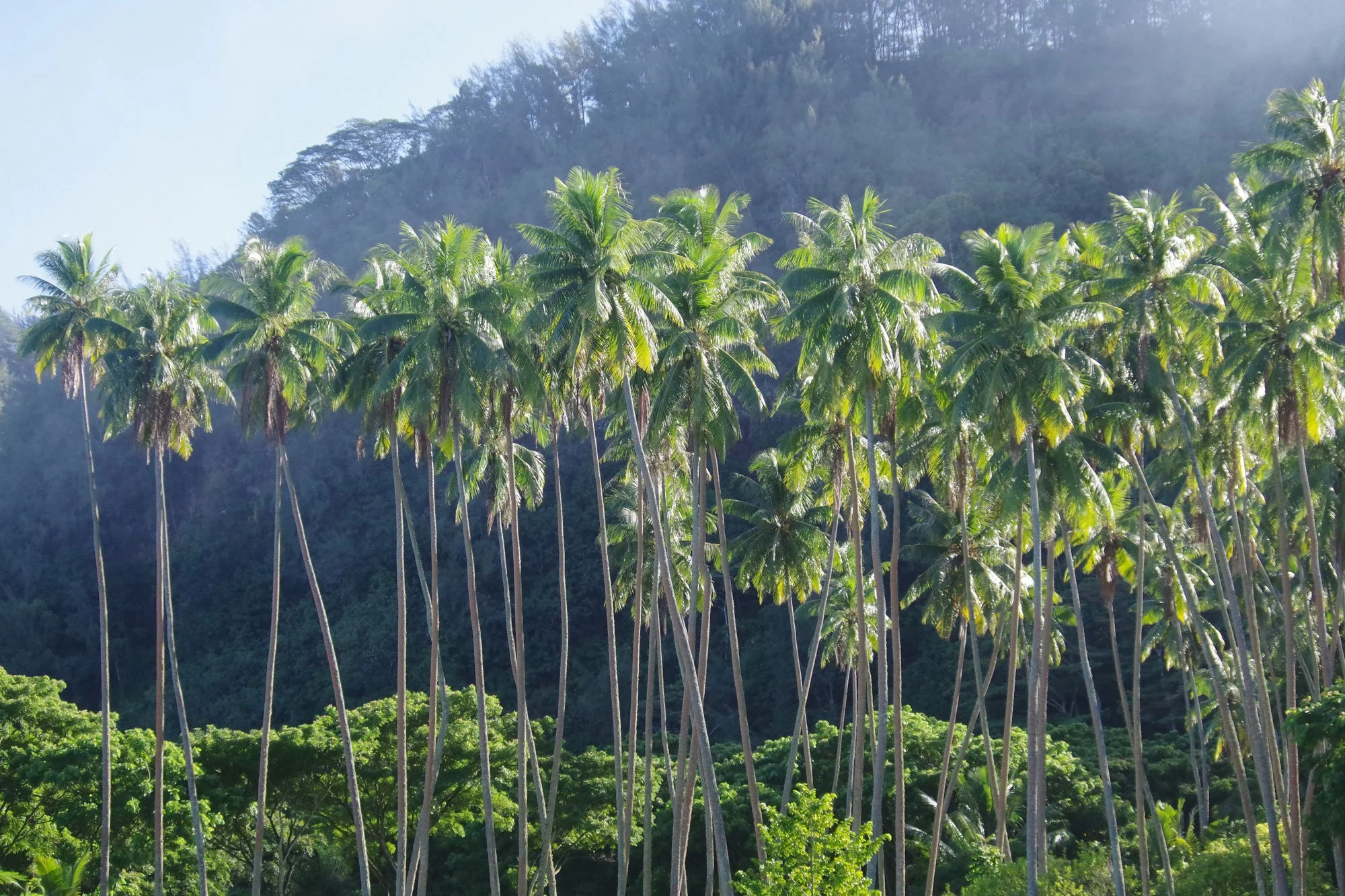
The road circles the entire coast in sixty kilometers or thirty-six miles. There are no traffic lights or high rises, just a sequence of small villages and roadside stands with the lagoon appearing and disappearing on your right. You could drive the entire island in an hour and a half if you didn't choose to stop anywhere.
Dinner was fish and fries, essentially always, at small places along the road. The husband and son had steak, for those who eat meat, and I had the fish, and neither of us desired anything different.
On the way home we spent our final hours at the InterContinental in Tahiti, in our first pool on this trip. Our flight left at midnight and what better way to fill the gap between checkout and a midnight departure.
Moorea will absolutely give you the version with the overwater bungalows if that is the trip you want, and there is nothing wrong with wanting it. But there is another experience available on the same island, and it costs less, asks slightly more of you, and it is the one I would absolutely go back for again.
Travel Tips
Getting to Moorea: Boats leave the Gare Maritime on the waterfront every hour or two, early morning to evening. The crossing is about thirty minutes on the fast catamarans, longer on the car ferries. Buy foot passenger tickets at the terminal the same day.
Rent a car. There are rental agencies right outside the ferry terminal at Vaiare. The roads are easy to drive. The coastal road is 60 km with kilometer markers, called PK, posted the whole way around.
Find your grocery store on day one so you know how far it is. There are only a couple on the island and they may be nowhere near you.
Buy fish off the roadside. Drive the coastal road and watch for a truck parked on the shoulder with the morning's catch. Different fishermen on different days depending on who went out. Cash only, no set hours, and once it's sold it's sold.
Navigating without reception. Signal drops in stretches, so screenshot or download your maps before you leave the house.
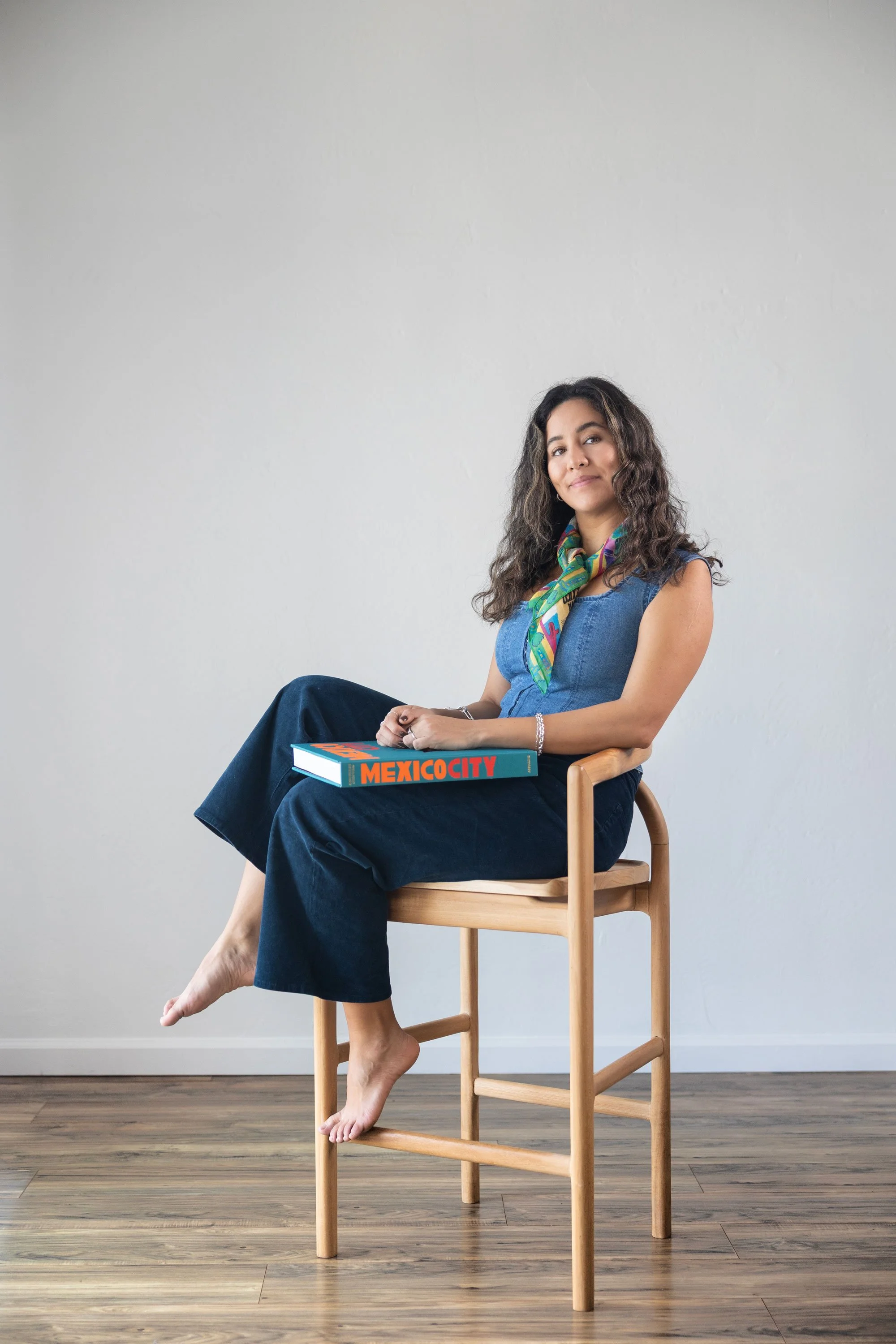
Aloreign is the creative work of Alondra: an Indigenous American and Mexican photographer, writer, and therapist based in San Diego.
This is my create space for photography, writing, and everything that doesn’t fit nearly into one category. I’d love to connect.